# 6 Spectrum sensing and cognitive radio

# 6.1 Introduction

Cognitive radio is a technology which is being developed to bring greater efficiency, speed and reliability to users of wireless devices. The number of high powered wireless devices coming on to the market is increasing exponentially placing an unprecedented demand on the limited radio spectrum. Cognitive radio technology is seen as a potential solution to this problem as it identifies unused frequencies in a local area and switches a device to this temporarily to provide users with uninterrupted and faster mobile services.

In the following, <span><span class="_kqswh2mm"><span class="_5pioz8co _189e1dm9 _1il9buyh _19lc184f _d0altlke">CRS</span></span></span> refers to Cognitive Radio Systems. One typical example of usage of <span>CRS</span> is in the so called “white spaces” (WS), which refers to frequency spectrum which is potentially available at a given time for further

utilisation within frequency spectrum originally planned another service (e.g. Broadcasting). Devices operating in the white spaces using cognitive radio features are called White Space Devices (WSD) \[14\].

# 6.2 Simulating spectrum sensing

The manual sets out how SEAMCAT can be used for spectrum sensing where the interfering devices (<span><span class="_kqswh2mm"><span class="_5pioz8co _189e1dm9 _1il9buyh _19lc184f _d0altlke">ILT</span></span></span>) try to detect the presence of protected services (e.g. the <span><span class="_kqswh2mm"><span class="_5pioz8co _189e1dm9 _1il9buyh _19lc184f _d0altlke">VLT</span></span></span>) transmitting in each of the potentially available channels. Spectrum sensing essentially involves conducting a measurement within a candidate channel to determine whether any protected service is present and transmitting. When a channel is determined to be vacant, sensing is typically applied to adjacent channels to identify what constraints there might be on transmission power, if any.

A key parameter for spectrum sensing is the detection threshold that is used by a cognitive device to detect the presence or the absence of a protected service’s transmission. If it detects no emission above this threshold in a channel, the white space device (WSD, i.e. the It) is allowed to transmit, otherwise the WSD keeps silent or look into other channels. You can study this phenomenon in SEAMCAT, which enables multiple cognitive radio systems. The cognitive radio feature mainly introduces the detection threshold and the selection of the operating frequency of the WSD.

In SEAMCAT, the CRSs are assumed to be the interferers. A SEAMCAT workspace will contain only 1 victim system and 1 or many interferers. It is possible to assess the aggregated impact of interferers that can be either <span><span class="_kqswh2mm"><span class="_5pioz8co _189e1dm9 _1il9buyh _19lc184f _d0altlke">CR</span></span></span> devices or not. The scenario allows the impact of spectrum sensing to be investigated where a cognitive radio device is activated nearby a victim system. Both the victim and the interfering dialogue interface should be filled to enable spectrum sensing in SEAMCAT. Figure 157 illustrates that the introduction of spectrum sensing requires an extra budget link called sensing Received Signal Strength (sRSS) which represents the signal which is transmitted by the <span>VLT</span> and is sensed by the It. Note that the It acts as a transceiver, meaning that when the energy is sensed though the bandwidth of the sensing device (i.e. the It), it is acting as a receiving device.

The sRSS (considering the unwanted mask of the <span><span class="_kqswh2mm"><span class="_5pioz8co _189e1dm9 _1il9buyh _19lc184f _d0altlke">DTT</span></span></span>) at the channel *m* is calculated as described in ANNEX 6:.

It is assumed that the frequency of the interfering cognitive radio device is dependent on the frequency range defined for the victim. This means that when the <span>CR</span> module is activated, the interfering frequency function dialogue box is de-activated (#4 of Figure 231). Depending on how the victim frequency is defined (i.e. constant, discrete or distributed between f<sub>min</sub> and f<sub>max</sub>). SEAMCAT only allows the use of the following distributions: Constant, User defined, Uniform, User defined (stair).

[![image.png](https://wiki.cept.org/uploads/images/gallery/2026-04/scaled-1680-/vjoR2mdSaQSAdgka-image.png)](https://wiki.cept.org/uploads/images/gallery/2026-04/vjoR2mdSaQSAdgka-image.png)

<div class="rich-media-item mediaSingleView-content-wrap image-align-start css-ep1gok" id="bkmrk-figure-157%3A-illustra"><div class="css-aijchy"><div><div class="_2rko18qm _vchhusvi _kqswh2mm _ect4ttxp _p12f1osq _c71l1osq _1bsb1qmm _4t3ine4n _1hlmd0i9 _1rquusvi _eg541i5c _mts3kb7n _1ntskb7n _yfmhtlke _5sb1v00u new-file-experience-wrapper" id="bkmrk-figure-157%3A-illustra-1"><div class="_1reo15vq _18m915vq _2rko18qm _1e0c1txw _kqswh2mm _p12f1osq _1bsb1osq _4t3i1osq _c71l1osq media-file-card-view"><div class="_kqswstnw _1bsb1osq _4t3i1osq _1e0c1txw _2lx21bp4 _1bah1h6o _4cvr1h6o align-center">**Figure 157: Illustration of 3 cognitive radio systems (WSD) and a victim system (sRSS is in blue)**</div></div></div></div></div></div>

# 6.3 Input system parameters

For the sensing feature to be activated, both the victim and interferer transmitters have to have the “interferer is <span><span class="_kqswh2mm"><span class="_5pioz8co _189e1dm9 _1il9buyh _19lc184f _d0altlke">CR</span></span></span>” selected (Figure 158). This will activate the spectrum sensing algorithm (see ANNEX 16:) and will allow you to set the transmitting characteristic of the victim link transmitter, i.e. the energy that the cognitive radio spectrum sensing device is to sense. You will be able to set the emission mask and the emission floor.

[![image.png](https://wiki.cept.org/uploads/images/gallery/2026-04/scaled-1680-/yM8eC2RmrzzMb1rS-image.png)](https://wiki.cept.org/uploads/images/gallery/2026-04/yM8eC2RmrzzMb1rS-image.png)

<div class="rich-media-item mediaSingleView-content-wrap image-align-start css-jammtw" id="bkmrk-figure-158%3A-selectio"><div class="css-ca0th7"><div><div class="_2rko18qm _vchhusvi _kqswh2mm _ect4ttxp _p12f1osq _c71l1osq _1bsb1qmm _4t3ine4n _1hlmd0i9 _1rquusvi _eg541i5c _mts3kb7n _1ntskb7n _yfmhtlke _5sb1v00u new-file-experience-wrapper" id="bkmrk-figure-158%3A-selectio-1"><div class="_1reo15vq _18m915vq _2rko18qm _1e0c1txw _kqswh2mm _p12f1osq _1bsb1osq _4t3i1osq _c71l1osq media-file-card-view"><div class="_kqswstnw _1bsb1osq _4t3i1osq _1e0c1txw _2lx21bp4 _1bah1h6o _4cvr1h6o align-center">**Figure 158: Selection of the <span>CR</span> algorithm**</div></div></div></div></div></div>**Table 20: Victim Link transmitter**

<div class="pm-table-container with-shadow-observer" id="bkmrk-description-symbol-t"><div class="pm-table-wrapper"><table style="width:100%;"><colgroup></colgroup><tbody><tr><td colspan="1" rowspan="1" style="width:16.2059%;">**Description**

</td><td colspan="1" rowspan="1" style="width:8.57869%;">**Symbol**

</td><td colspan="1" rowspan="1" style="width:9.65296%;">**Type**

</td><td colspan="1" rowspan="1" style="width:11.3203%;">**Unit**

</td><td colspan="1" rowspan="1" style="width:54.2183%;">**Comments**

</td></tr><tr><td colspan="1" rowspan="1" style="width:16.2059%;">Interferer is <span>CR</span>

</td><td colspan="1" rowspan="1" style="width:8.57869%;"></td><td colspan="1" rowspan="1" style="width:9.65296%;">switch

</td><td colspan="1" rowspan="1" style="width:11.3203%;"></td><td colspan="1" rowspan="1" style="width:54.2183%;">When the <span>CR</span> button is checked then it allows to set the emission characteristics of the VLT (used for the sRSS calculation only)

</td></tr><tr><td colspan="1" rowspan="1" style="width:16.2059%;">Emission mask:

Unwanted signal level (VLT)

</td><td colspan="1" rowspan="1" style="width:8.57869%;"></td><td colspan="1" rowspan="1" style="width:9.65296%;">Function (X,Y) (MHz)

</td><td colspan="1" rowspan="1" style="width:11.3203%;">dBm/reference bandw. (MHz)

</td><td colspan="1" rowspan="1" style="width:54.2183%;">Define the mask of the transmitter, in the emission bandwidth and out of the emission bandwidth.

Negative values in the relative mask should be chosen in a way that the integration over the emission bandwidth results in the total emitted power. If constant mask, there is no emission outside of the bandwidth.

</td></tr><tr><td colspan="1" rowspan="1" style="width:16.2059%;">Unwanted emissions floor: Noise floor signal level

</td><td colspan="1" rowspan="1" style="width:8.57869%;"></td><td colspan="1" rowspan="1" style="width:9.65296%;">Function (X,Y) (MHz)

</td><td colspan="1" rowspan="1" style="width:11.3203%;">dBm/

reference bandw. (MHz)

</td><td colspan="1" rowspan="1" style="width:54.2183%;">Define the minimum strength of the unwanted emissions.

So the unwanted emissions equal to Max(Pwt + Unwanted emission, Unwanted emissions floor)

</td></tr></tbody></table>

<div class="sentinel-right">  
</div></div><div class="pm-table-sticky-scrollbar-container-view-page"></div></div> Note that the settings of the emissions mask and the emission floor is the same as for the interfering link (i.e. same units).

![image.png](https://wiki.cept.org/uploads/images/gallery/2026-04/scaled-1680-/fL2ExCGwmnBJTKYF-image.png)

![image.png](https://wiki.cept.org/uploads/images/gallery/2026-04/scaled-1680-/CuTNyN0AvUdcsNO0-image.png)

**Figure 159: Activate the <span>CR</span> in the VLT (Victim Link) to consider its emission characteristics**   
 **(i.e. used in the sRSS calculation)**

# 6.4 Scenario parameters

In addidtion to the input system parameters, you also need to set charateristics of the spectrum sensing algorithm as described in Section 10.4.

# 6.5 Examples

<span>At the end of the simulation, SEAMCAT provides a set of output vectors as presented in Section 12.4. The following subsections present examples on how to interpret the results.</span>

# 6.5.1 All the channels are available

[![image.png](https://wiki.cept.org/uploads/images/gallery/2026-04/scaled-1680-/7Uxar2nrnZdfJGXT-image.png)](https://wiki.cept.org/uploads/images/gallery/2026-04/7Uxar2nrnZdfJGXT-image.png)

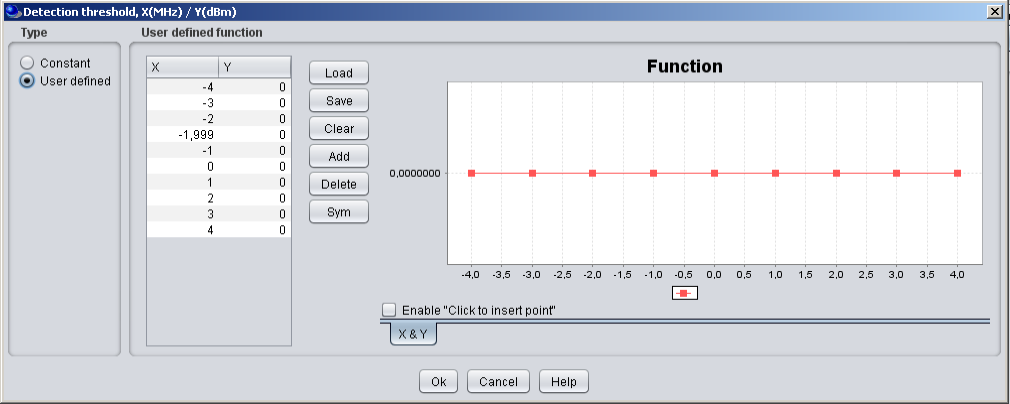
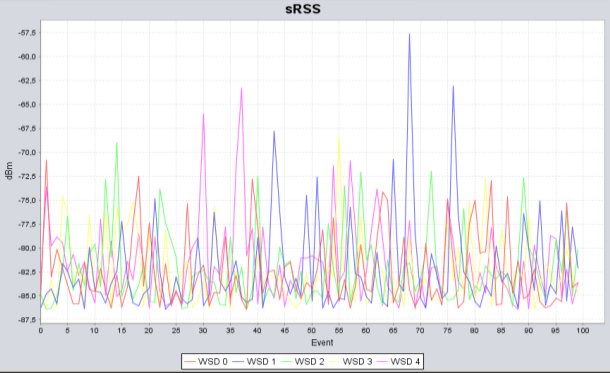
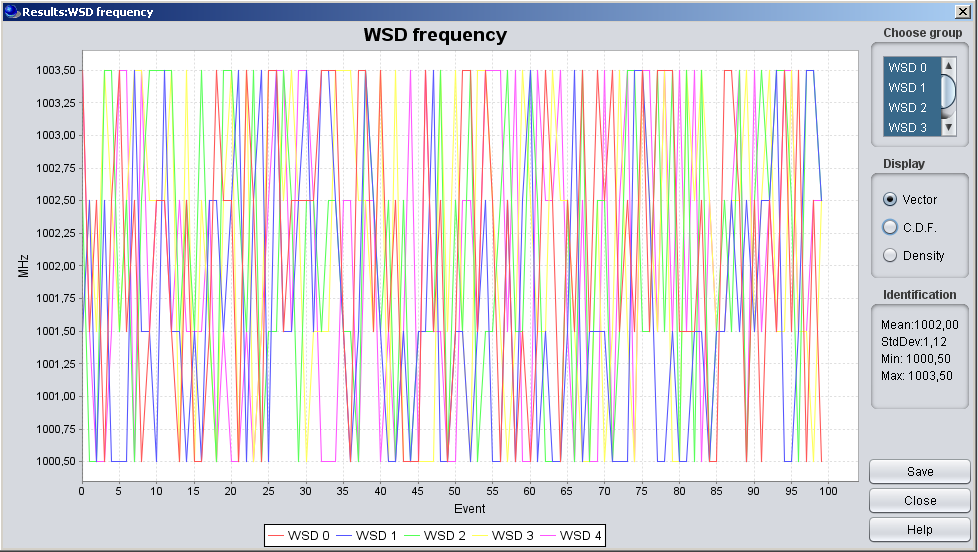
In such a scenario, the detection threshold is taken to a value of 0 dB (Figure 160) much higher than the sRSS level (average = -82.09 dBm) (Figure 161). Therefore, no victim system has been detected and the WSDs are allowed to transmit in any of the specified channels (Figure 162) per event.

<table border="1" id="bkmrk-figure-160%3A-selectio" style="border-collapse: collapse; width: 100%;"><colgroup><col style="width: 50%;"></col><col style="width: 50%;"></col></colgroup><tbody><tr><td>[![image.png](https://wiki.cept.org/uploads/images/gallery/2026-04/scaled-1680-/NvsnjPbEqoFTFgHm-image.png)](https://wiki.cept.org/uploads/images/gallery/2026-04/NvsnjPbEqoFTFgHm-image.png)

</td><td>[![image.png](https://wiki.cept.org/uploads/images/gallery/2026-04/scaled-1680-/7br9kXHluPxleAh6-image.png)](https://wiki.cept.org/uploads/images/gallery/2026-04/7br9kXHluPxleAh6-image.png)

</td></tr><tr><td>**Figure 160: Selection of a high**   
 **detection threshold**

</td><td>**Figure 161: The sRSS values are well below the**

**detection threshold, so no victim system have been detected**

</td></tr></tbody></table>

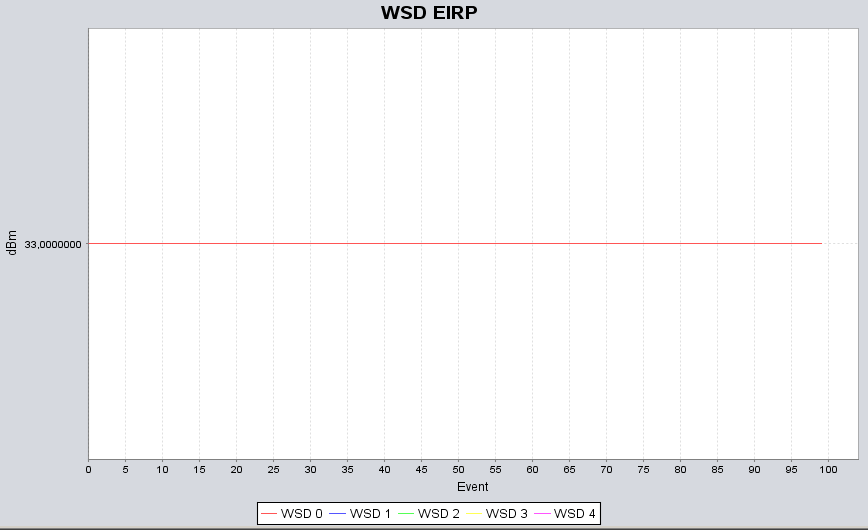
In such a case the e.i.r.p.used in the simulation is the Tx<sub data-renderer-mark="true">power</sub> (=-33 dBm) + G<sub data-renderer-mark="true">max</sub> (=0 dBi), meaning that the in-block e.i.r.p. limit does not apply. This means that whatever the frequency selected by the <span data-highlighted="true" data-vc="highlighted-text"><span class="_kqswh2mm"><span class="_5pioz8co _189e1dm9 _1il9buyh _19lc184f _d0altlke" data-testid="definition-highlighter">WSD</span></span></span> its e.i.r.p.. is the same (Figure 164) (here assuming that the Power Control at the It is OFF).

<table border="1" id="bkmrk-figure-162%3A-the-wsd-" style="border-collapse: collapse; width: 100%;"><colgroup><col style="width: 50%;"></col><col style="width: 50%;"></col></colgroup><tbody><tr><td>[![image.png](https://wiki.cept.org/uploads/images/gallery/2026-04/scaled-1680-/uKImCZtBjBA3mh3a-image.png)](https://wiki.cept.org/uploads/images/gallery/2026-04/uKImCZtBjBA3mh3a-image.png)

</td><td>[![image.png](https://wiki.cept.org/uploads/images/gallery/2026-04/scaled-1680-/1oGjqenBp7CqIXsK-image.png)](https://wiki.cept.org/uploads/images/gallery/2026-04/1oGjqenBp7CqIXsK-image.png)

</td></tr><tr><td>**Figure 162: The <span data-highlighted="true" data-vc="highlighted-text">WSD</span> can transmit anywhere**

**in the victim frequency range**

</td><td>**Figure 163: e.i.r.p. set to -33 dBm as set in the It, i.e.**

**Txpower (=-33 dBm) + Gmax (=0 dBi),**

**meaning that there were no limit applied to the It Tx power**

</td></tr></tbody></table>

Figure 165 illustrates that on average there are 1.17 WSDs active at 1000.5 MHz per event, 1.23 WSDs in 1001.5 MHz, 1.34 WSDs in 1002.5 MHz and 1.26 WSDs in 1003.5 MHz for the same out of 5 which were input to the simulation. In this case all the WSDs were active (but in different frequencies) since the sum equal to 5 (i.e. none of the WSDs have been turned off).

<table border="1" id="bkmrk-figure-164%3A-e.i.r.p." style="border-collapse: collapse; width: 100%;"><colgroup><col style="width: 50%;"></col><col style="width: 50%;"></col></colgroup><tbody><tr><td>[![image.png](https://wiki.cept.org/uploads/images/gallery/2026-04/scaled-1680-/h74WnMtwgom9jRoR-image.png)](https://wiki.cept.org/uploads/images/gallery/2026-04/h74WnMtwgom9jRoR-image.png)

</td><td>[![image.png](https://wiki.cept.org/uploads/images/gallery/2026-04/scaled-1680-/jvK756FGpTw2lHV8-image.png)](https://wiki.cept.org/uploads/images/gallery/2026-04/jvK756FGpTw2lHV8-image.png)

</td></tr><tr><td>**Figure 164: e.i.r.p. is the same irrespective of the frequency**

</td><td>**Figure 165: Illustration of the number of WSDs per frequency**

</td></tr></tbody></table>

# 6.5.2 All the channels are blocked

In such a scenario, the detection threshold is taken to a lower value compared to the sRSS and none of the WSDs are transmitting. In SEAMCAT, the Tx power is set to -1000 dBm (Figure 166). The <span data-highlighted="true" data-vc="highlighted-text"><span class="_kqswh2mm"><span class="_5pioz8co _189e1dm9 _1il9buyh _19lc184f _d0altlke" data-testid="definition-highlighter">WSD</span></span></span> frequency is the same as the victim frequency per event.

![image.png](https://wiki.cept.org/uploads/images/gallery/2026-04/scaled-1680-/VGHd2FJRZGMceEQH-image.png)**Figure 166: all the WSDs are off i.e. -1000 dBm**

Note that in this specific case, the average e.i.r.p. and average WSDs per frequency can not be calculated and therefore can not be displayed as shown in Figure 168.

![image.png](https://wiki.cept.org/uploads/images/gallery/2026-04/scaled-1680-/hVmWgmJnup7fRux2-image.png)**Figure 167: All the WSDs are off i.e. -1000 dBm**

# 6.5.3 Some of the channels are blocked and some are available

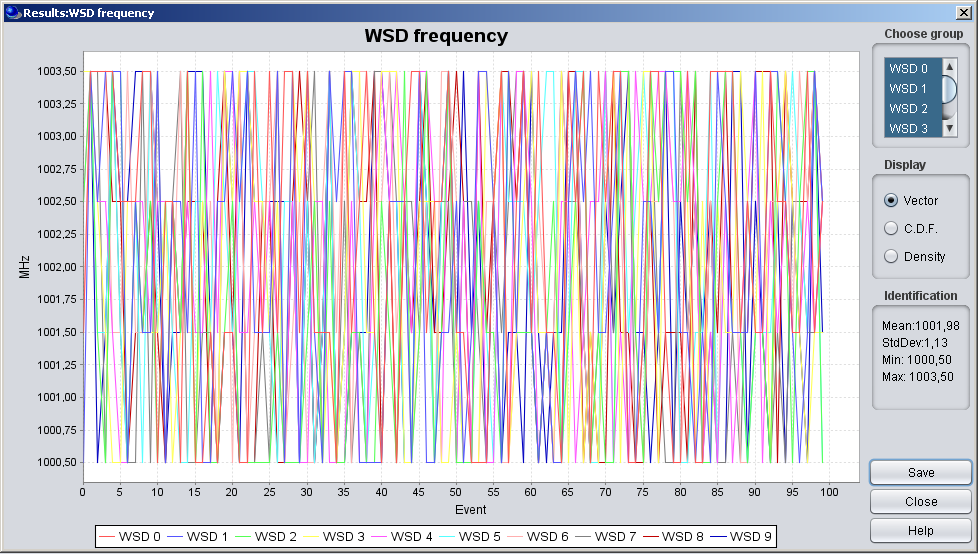
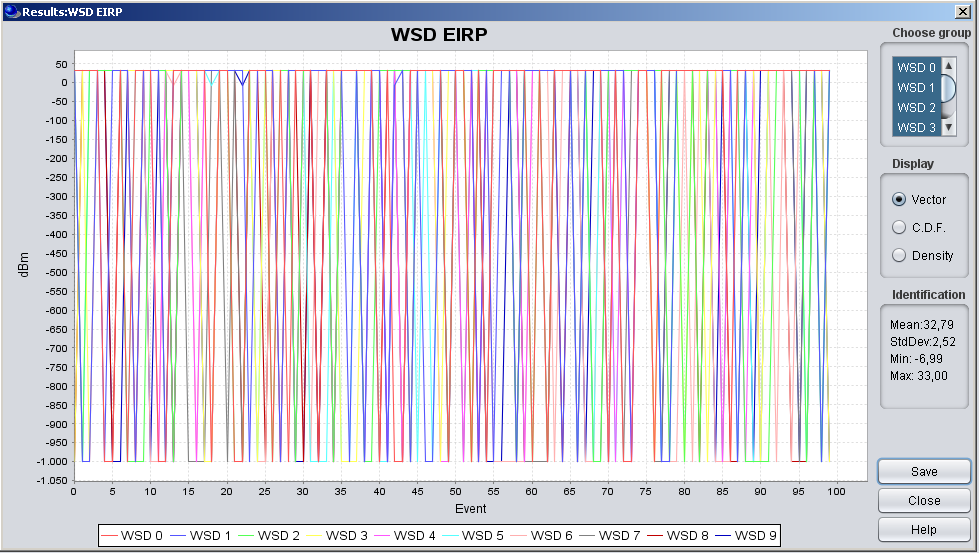
This is a typical example. In such a scenario, the detection threshold is taken to a value of -80 dB (flat over the frequency range). This mean that when considering the sRSS of Figure 168, for some of the events, the sRSS will be above that threshold and therefore some WSDs will be considered as off (which explains the -1000 dBm value in Figure 169 (b)) and the <span data-highlighted="true" data-vc="highlighted-text"><span class="_kqswh2mm"><span class="_5pioz8co _189e1dm9 _1il9buyh _19lc184f _d0altlke" data-testid="definition-highlighter">WSD</span></span></span> frequencies are randomly distributed.

[![image.png](https://wiki.cept.org/uploads/images/gallery/2026-04/scaled-1680-/hMc9gIN0JRYu0wRS-image.png)](https://wiki.cept.org/uploads/images/gallery/2026-04/hMc9gIN0JRYu0wRS-image.png)

<div class="rich-media-item mediaSingleView-content-wrap image-align-start css-i5keov" data-layout="align-start" data-media-vc-wrapper="true" data-node-type="mediaSingle" data-renderer-start-pos="410" data-vc="media-single" data-width="442" data-width-type="pixel" id="bkmrk-figure-168%3A-srss-for"><div class="css-1mfrdyg"><div data-alt="" data-collection="contentId-494491" data-context-id="494491" data-file-mime-type="image/png" data-file-name="68.png" data-file-size="283314" data-height="552" data-id="c807dd06-ceaf-4644-941e-2d53cfcfd818" data-node-type="media" data-renderer-start-pos="411" data-type="file" data-width="977"><div class="_2rko18qm _vchhusvi _kqswh2mm _ect4ttxp _p12f1osq _c71l1osq _1bsb1qmm _4t3ine4n _1hlmd0i9 _1rquusvi _eg541i5c _mts3kb7n _1ntskb7n _yfmhtlke _5sb1v00u new-file-experience-wrapper" data-media-vc-wrapper="true" data-testid="media-card-view" id="bkmrk-figure-168%3A-srss-for-1"><div class="_1reo15vq _18m915vq _2rko18qm _1e0c1txw _kqswh2mm _p12f1osq _1bsb1osq _4t3i1osq _c71l1osq media-file-card-view" data-cursor="pointer" data-test-media-name="68.png" data-test-progress="1" data-test-source="remote" data-test-status="complete" data-testid="media-file-card-view"><div class="_kqswstnw _1bsb1osq _4t3i1osq _1e0c1txw _2lx21bp4 _1bah1h6o _4cvr1h6o align-center" data-testid="ImageRendererWrapper">![](blob:https://ecowiki.atlassian.net/7e6ed786-3199-4b32-a3f2-160c6e634003#media-blob-url=true&id=c807dd06-ceaf-4644-941e-2d53cfcfd818&collection=contentId-494491&contextId=494491&width=977&height=552&alt=&clientId=113268fe-fe5b-4bc3-8ff3-07965dbf1d18)**Figure 168: sRSS for 5 WSDs per event**</div><div class="_kqswstnw _1bsb1osq _4t3i1osq _1e0c1txw _2lx21bp4 _1bah1h6o _4cvr1h6o align-center" data-testid="ImageRendererWrapper"></div><div class="_kqswstnw _1bsb1osq _4t3i1osq _1e0c1txw _2lx21bp4 _1bah1h6o _4cvr1h6o align-center" data-testid="ImageRendererWrapper"></div></div><div class="_kqswstnw _1bsb1osq _4t3i1osq _1e0c1txw _2lx21bp4 _1bah1h6o _4cvr1h6o align-center" data-testid="ImageRendererWrapper"></div></div></div></div></div><div class="_kqswstnw _1bsb1osq _4t3i1osq _1e0c1txw _2lx21bp4 _1bah1h6o _4cvr1h6o align-center" data-testid="ImageRendererWrapper" id="bkmrk--1"></div><table border="1" id="bkmrk-%28a%29-wsd-frequency-%28b" style="border-collapse: collapse; width: 100%; height: 29.6px;"><colgroup><col style="width: 50.0477%;"></col><col style="width: 50.0477%;"></col></colgroup><tbody><tr style="height: 29.6px;"><td style="height: 29.6px;">[![image.png](https://wiki.cept.org/uploads/images/gallery/2026-04/scaled-1680-/eoWBw1VczAacfQXx-image.png)](https://wiki.cept.org/uploads/images/gallery/2026-04/eoWBw1VczAacfQXx-image.png)

</td><td style="height: 29.6px;">[![image.png](https://wiki.cept.org/uploads/images/gallery/2026-04/scaled-1680-/0cw7Dr7SuQQAFmnz-image.png)](https://wiki.cept.org/uploads/images/gallery/2026-04/0cw7Dr7SuQQAFmnz-image.png)

</td></tr><tr><td>**(a) <span data-highlighted="true" data-vc="highlighted-text">WSD</span> frequency**

</td><td>**(b) <span data-highlighted="true" data-vc="highlighted-text">WSD</span> e.i.r.p.**

</td></tr></tbody></table>

**Figure 169: Output results of the <span data-highlighted="true" data-vc="highlighted-text">WSD</span> in (a) frequency and (b) e.i.r.p.**

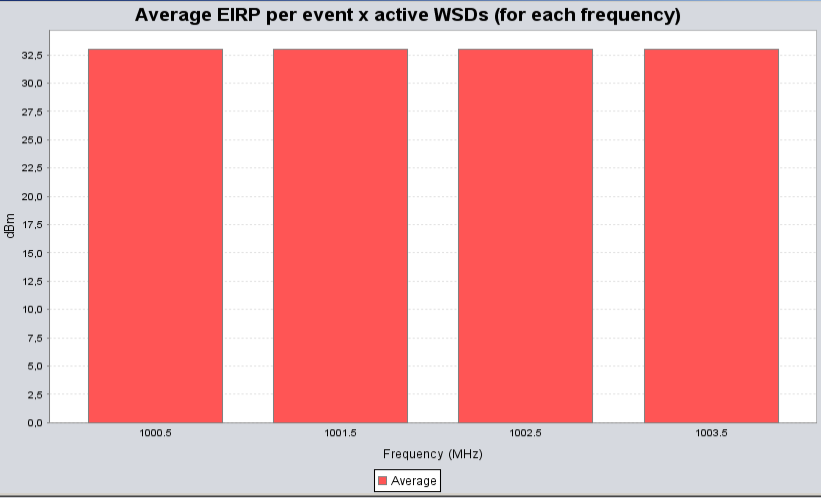
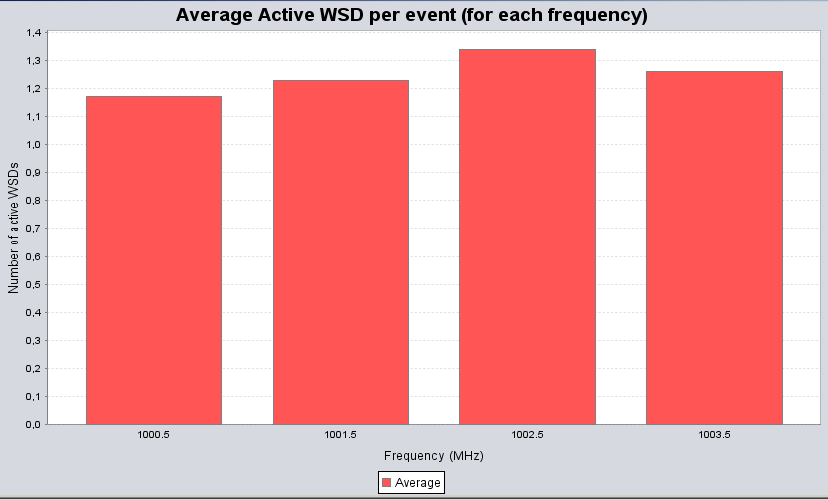
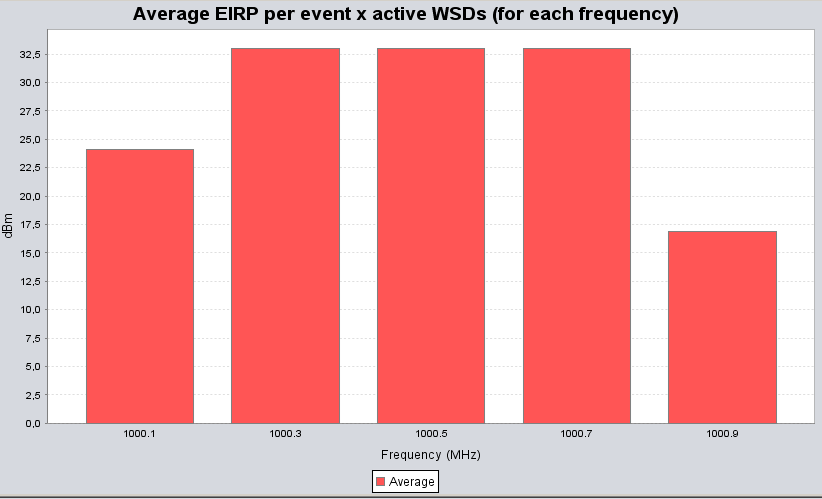
In this case, one can see that all the channels were occupied in Figure 170. The WSDs were allowed to transmit with an e.i.r.p. of 33 dBm in the 3 middle channels (1000.3 MHz to 1000.7 MHz) while for the side channels less power was allowed (i.e. 24 dBm for 1000.1 MHz and 16.89 dBm for 1000.9 MHz).

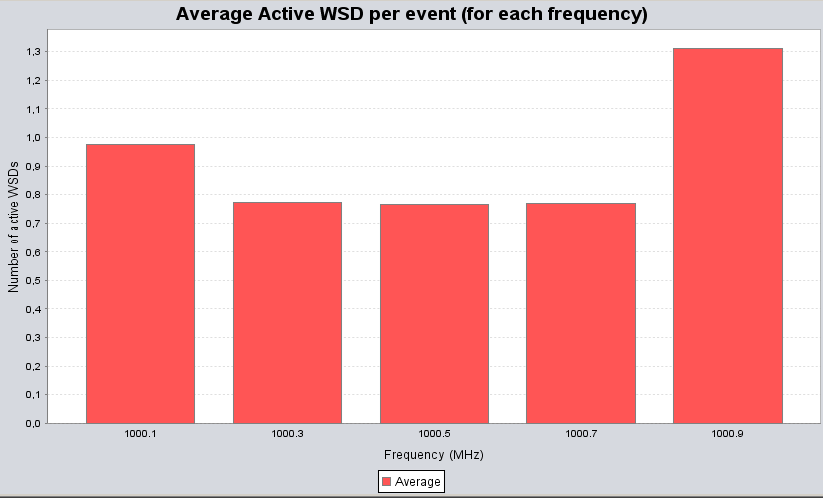
Figure 170 (b) also indicates that not all the simulated WSDs were active (those having an e.i.r.p. of -1000 dBm), and that per event about only 1 <span data-highlighted="true" data-vc="highlighted-text">WSD</span> was active.

<table border="1" id="bkmrk-%28a%29-average-e.i.r.p." style="border-collapse: collapse; width: 100%; height: 296.312px;"><colgroup><col style="width: 50%;"></col><col style="width: 50%;"></col></colgroup><tbody><tr style="height: 266.712px;"><td style="height: 266.712px;">[![image.png](https://wiki.cept.org/uploads/images/gallery/2026-04/scaled-1680-/MY0UAVVeYzGuJbHR-image.png)](https://wiki.cept.org/uploads/images/gallery/2026-04/MY0UAVVeYzGuJbHR-image.png)

</td><td style="height: 266.712px;">[![image.png](https://wiki.cept.org/uploads/images/gallery/2026-04/scaled-1680-/L311iPSAU3O6TW8E-image.png)](https://wiki.cept.org/uploads/images/gallery/2026-04/L311iPSAU3O6TW8E-image.png)

</td></tr><tr style="height: 29.6px;"><td style="height: 29.6px;">**(a) average e.i.r.p.**

</td><td style="height: 29.6px;">**(b) average number of active WSDs**

</td></tr></tbody></table>

**Figure 170: output results of the <span data-highlighted="true" data-vc="highlighted-text">WSD</span> in (a) frequency and (b) e.i.r.p.**